




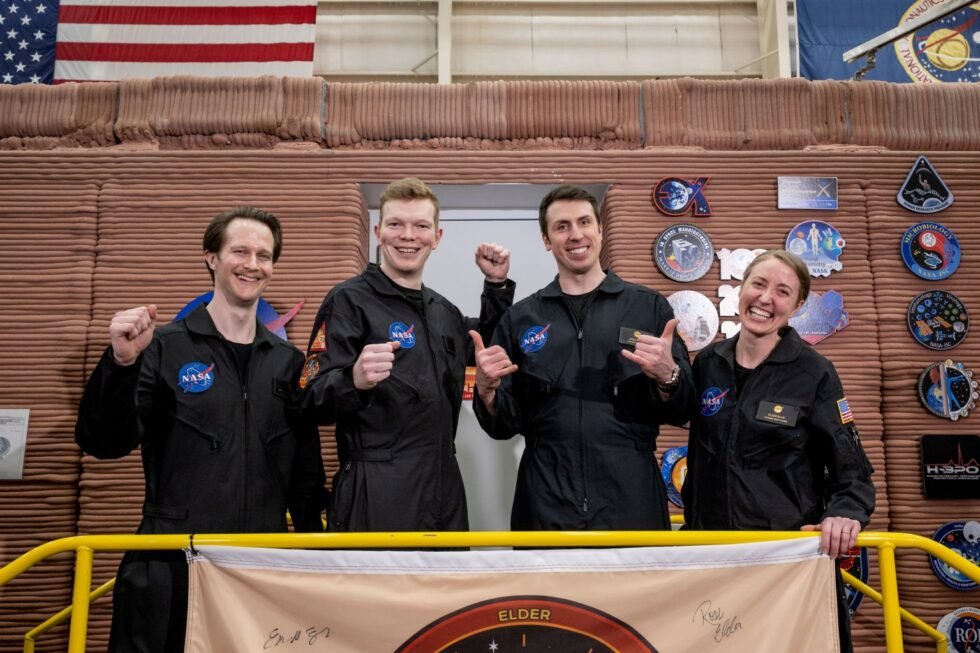
NASA is reviewing what four volunteers learned during a 378-day simulated Mars mission, with a November 9 account describing the demands of isolation, limited supplies and delayed communications.
The CHAPEA Mission 2 crew left the Mars Dune Alpha habitat at Johnson Space Center in Houston on October 31. Ross Elder, Ellen Ellis, James Spicer and Matthew Montgomery had entered the roughly 1,700-square-foot facility in October 2025.
Testing life with constraints
Activities included simulated Marswalks, robotic exploration, maintenance, exercise and growing crops. Communications could take up to 22 minutes each way, forcing the team to work without instant replies from its support staff.
NASA said two weeks of evaluations and debriefings would help researchers interpret the health and performance data. The findings are intended to inform decisions about crew time, communications, food and water systems.
The mission was an Earth-based research simulation. Its completion does not demonstrate that the full range of conditions on Mars has been reproduced.
Source: NASA’s November 9 mission account.
Featured photo: The crew outside the Houston habitat on October 31, 2026. NASA/James Blair.
